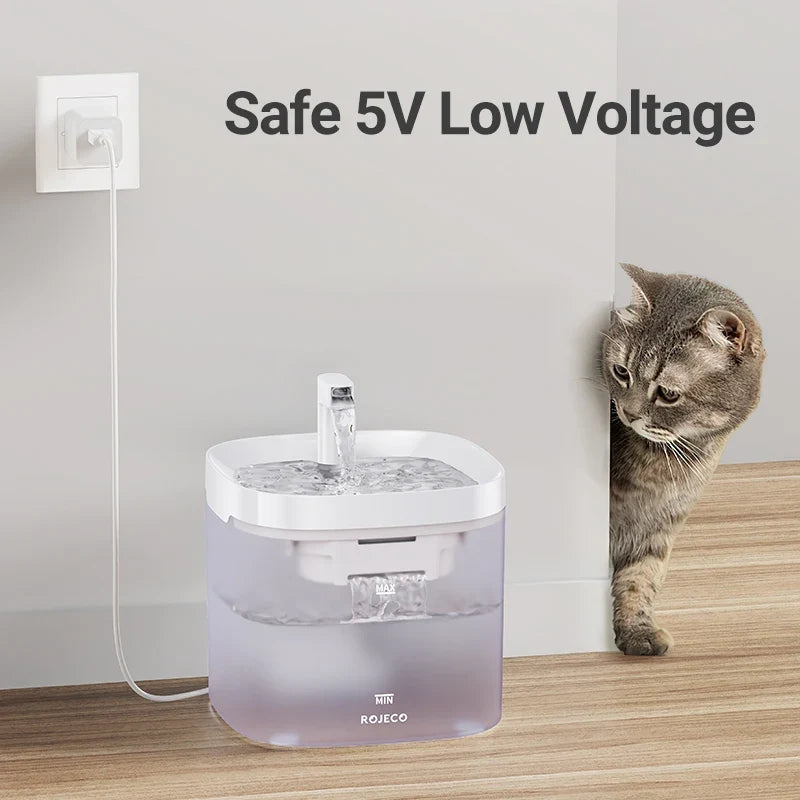
Cats evolved from desert animals that got most of their water from their prey. That's why many cats don't feel very thirsty, even when they could use more water. The good news: a few small changes can make a real difference.
How much water does a cat need?
A common rule of thumb is roughly 40–60 ml of water per kg of body weight per day — so about a cup (200–250 ml) for an average 4–5 kg cat. That includes the water in their food, which is why cats on wet food usually drink less from the bowl.
6 ways to help your cat drink more
- Try moving water. Many cats prefer running water to a still bowl. A water fountain keeps water flowing and fresh all day.
- Keep water away from food. In the wild, cats avoid water near their food. Put the bowl or fountain in a different spot from the food dish.
- Use a wide, shallow bowl. Some cats dislike their whiskers touching the sides of a narrow bowl.
- Add water stations. Put water in two or three places around your home, especially in multi-cat homes.
- Add wet food. Wet food is around 70–80% water, so even one wet meal a day boosts hydration.
- Keep it fresh. Change the water daily and wash the bowl or fountain regularly. Cats can smell stale water.
Signs your cat may be dehydrated
- Low energy or hiding more than usual
- Dry, sticky gums
- Skin that stays "tented" when gently pinched at the shoulders
- Smaller or fewer clumps in the litter box
When to see a vet: if your cat suddenly drinks a lot more or a lot less than usual, or shows any of the signs above, call your vet. Changes in thirst can be an early sign of health problems like kidney disease or diabetes.

