Cats are very clean animals — and very picky about their bathroom. Most litter box problems aren't "bad behaviour". They're your cat telling you something about the box.
The golden rules
- One box per cat, plus one. Two cats? Three boxes. This avoids queues and territory fights.
- Scoop at least once a day. Cats may avoid a dirty box and go somewhere else instead.
- Fully clean the box regularly. Empty it, wash with mild unscented soap and water, and refill with fresh litter every 1–2 weeks (clumping litter) or more often for non-clumping.
- About 5–7 cm (2–3 inches) of litter is the depth most cats like.
- Quiet, easy-to-reach spot. Not next to their food, and not beside a noisy washing machine.
- Skip strong scents. Cats' noses are far more sensitive than ours. Many cats prefer unscented litter.
Stop litter from spreading
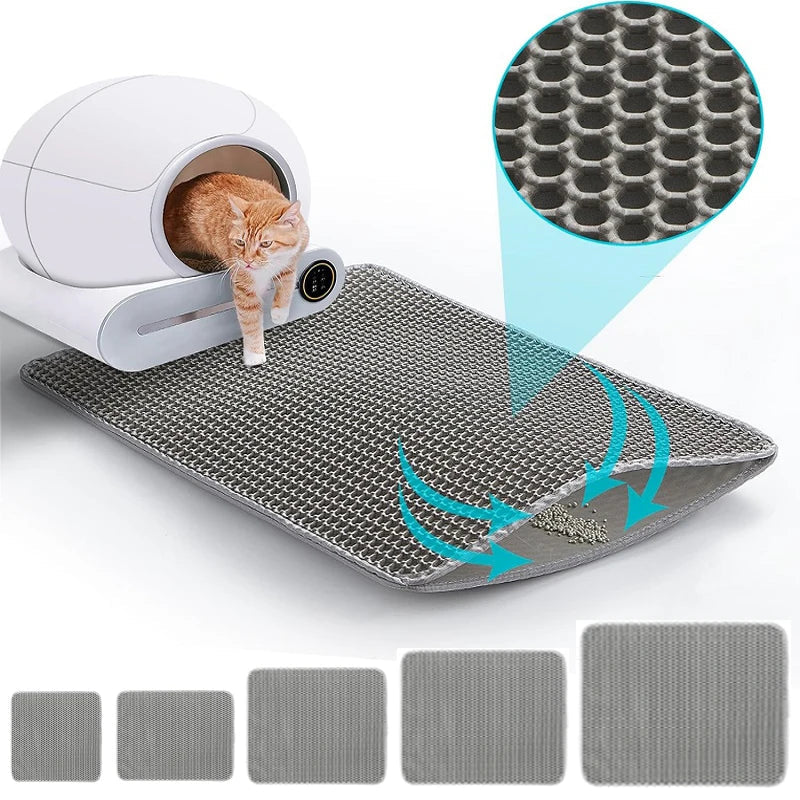
Litter sticks to paws and gets carried around the home. A textured mat in front of the box catches the grains as your cat steps out — just tip it back into the box or shake it out.
When the litter box is a health warning
Call your vet straight away if your cat:
- Strains in the box or produces little or no urine — this can be an emergency, especially in male cats
- Suddenly starts going outside the box
- Goes much more or much less often than usual
- Has blood in their urine or stool

